

-
1 balayage (relaxé) synchronisé
синхронизированная развертка
-
[IEV number 314-06-11]EN
synchronized sweep
mode of operation of a free-running time base in which the recurrent sweep is synchronized to maintain the sweep period equal to the period of the displayed quantity, or a multiple of this period, thus producing a stable display
NOTE – Synchronization is normally maintained for small changes in the period of the observed quantity.
[IEV number 314-06-11]FR
balayage (relaxé) synchronisé
fonctionnement d'une base de temps relaxée dans lequel le balayage périodique est synchronisé de manière à maintenir la période de balayage égale à la période de la grandeur représentée, ou à un multiple de cette période, produisant ainsi une image stable
NOTE – La synchronisation est normalement assurée pour des légers changements de période de la grandeur observée.
[IEV number 314-06-11]Тематики
- измерение электр. величин в целом
EN
DE
FR
Франко-русский словарь нормативно-технической терминологии > balayage (relaxé) synchronisé
-
2 tension assignée
номинальное напряжение
Напряжение, установленное изготовителем для прибора
[ ГОСТ Р 52161. 1-2004 ( МЭК 60335-1: 2001)]
номинальное напряжение Uном, кВ
Номинальное междуфазное напряжение электрической сети, для работы в которой предназначены коммутационные аппараты.
[ ГОСТ Р 52726-2007]
номинальное напряжение
Un
Напряжение, применяемое для обозначения или идентификации системы электроснабжения.
[ ГОСТ Р 51317.4.30-2008 (МЭК 61000-4-30:2008)]EN
rated voltage
voltage assigned to the appliance by the manufacturer
[IEC 60335-1, ed. 4.0 (2001-05)]
rated voltage
quantity value assigned, generally by the manufacturer, for a specified operating condition of a machine
[IEC 60034-18-41, ed. 1.0 (2006-10)]
rated voltage
input or output supply voltage for which equipment is designed or specified
[IEC 88528-11, ed. 1.0 (2004-03)]
rated voltage
specified value of the voltage at the terminals of the machine when operating at a rating. If unidirectional, the voltage is the arithmetic mean of the recurring waveform and if alternating it is the root mean square value of the fundamental frequency component of the recurring waveform
NOTE - In the case of a machine with a protective resistor permanently in series, the resistor is considered as an integral part of the machine
[IEC 60349-1, ed. 1.0 (1999-11)]
rated voltage
the value of voltage assigned by the manufacturer to a component, device or equipment and to which operation and performance characteristics are referred
NOTE - Equipment may have more than one rated voltage value or may have a rated voltage range.
[IEC 62497-1, ed. 1.0 (2010-02)]
rated voltage
reference voltage for which the cable is designed, and which serves to define the electrical tests
NOTE 1 - The rated voltage is expressed by the combination of two values: Uo/U expressed in volts (V):
Uo being the r.m.s. value between any insulated conductor and "earth" (metal covering of the cable or the surrounding medium);
U being the r.m.s. value between any two phase conductors of a multicore cable or of a system of single-core cables.
In an alternating-current system, the rated voltage of a cable is at least equal to the nominal voltage of the system for which it is intended.
This condition applies both to the value Uo and to the value U.
In a direct current system, the nominal voltage of the system is not higher than 1,5 times the rated voltage of the cable.
NOTE 2 - The operating voltage of a system may permanently exceed the nominal voltage of such a system by 10 %. A cable can be used at a 10 % higher operating voltage than its rated voltage if the latter is at least equal to the nominal voltage of the system
[IEC 60245-1, ed. 4.0 (2003-12)]
rated voltage
highest allowable voltage between the conductors in a twin and multi conductor cable, or between one conductor and an electrical conductive screen, or between the two ends of a single core cable, or earth in unscreened cables
[IEC 60800, ed. 3.0 (2009-07)]
rated voltage
the r.m.s. line-to-line voltage under rated conditions
Primary side of input transformer: ULN
Converter input: UVN
Converter output: UaN
Motor voltage: UAN
[IEC 61800-4, ed. 1.0 (2002-09)]
rated voltage
input or output voltage (for three-phase supply, the phase-to-phase voltage) as declared by the manufacturer
[IEC 62040-1, ed. 1.0 (2008-06)]
nominal voltage, Un
voltage by which a system is designated or identified
[IEC 61000-4-30, ed. 2.0 (2008-10)]FR
tension assignée
tension attribuée à l'appareil par le fabricant
[IEC 60335-1, ed. 4.0 (2001-05)]
tension nominale
tension assignée, généraleme<>value of voltage assigned by the manufacturer, to a componentnt par le constructeur pour des conditions spécifiées de fonctionnement de la machine
[IEC 60034-18-41, ed. 1.0 (2006-10)]
tension assignée
tension spécifiée aux bornes de la machine quand celle-ci fonctionne au régime assigné. Dans le cas d'une tension redressée, sa valeur est égale à la valeur moyenne de l'onde périodique. Dans le cas d'une tension alternative, sa valeur est égale à la valeur efficace de la composante fondamentale de l'onde périodique
NOTE - Dans le cas d'une machine équipée d'une résistance de protection connectée en permanence en série, la résistance est considérée comme faisant partie intégrante de la machine
[IEC 60349-1, ed. 1.0 (1999-11)]
tension assignée
valeur de la tension, assignée par le constructeur à un composant, à un dispositif ou à un matériel, et à laquelle on se réfère pour le fonctionnement et pour les caractéristiques fonctionnelles
NOTE - Les matériels peuvent avoir plusieurs valeurs ou une plage de tensions assignées.
[IEC 62497-1, ed. 1.0 (2010-02)]
tension assignée
tension de référence pour laquelle le conducteur ou le câble est prévu et qui sert à définir les essais électriques
NOTE 1 - La tension assignée est exprimée par la combinaison de deux valeurs Uo /U, exprimées en volts (V):
Uo étant la valeur efficace entre l'âme d'un conducteur isolé quelconque et la «terre» (revêtement métallique du câble au milieu environnant);
U étant la valeur efficace entre les âmes conductrices de deux conducteurs de phase quelconques d'un câble multiconducteur ou d'un système de câbles monoconducteurs ou de conducteurs.
Dans un système à courant alternatif, la tension assignée d'un conducteur ou d’un câble est au moins égale à la tension nominale du système pour lequel il est prévu.
Cette condition s'applique à la fois à la valeur Uo et à la valeur U.
Dans un système à courant continu, la tension nominale admise du système n’est pas supérieure à 1,5 fois la tension assignée du conducteur ou du câble.
NOTE 2 - La tension de service d'un système peut en permanence dépasser la tension nominale dudit système de 10 %. Un conducteur ou un câble peut être utilisé à une tension de service supérieure de 10 % à sa tension assignée si cette dernière est au moins égale à la tension nominale du système
[IEC 60245-1, ed. 4.0 (2003-12)]
tension assignée
tension maximale admissible entre les âmes dans un câble ayant une paire ou multi conducteur ou entre une âme et un écran conducteur électrique ou avec la terre pour un câble non écranté ou encore entre les deux extrémités d’un câble à âme unique
[IEC 60800, ed. 3.0 (2009-07)]
tension assignée
valeur efficace de la tension de ligne (entre phases) dans les conditions assignées
Primaire du transformateur d’entrée: ULN
Entrée du convertisseur: UVN
Sortie du convertisseur: UaN
Moteur: UAN
[IEC 61800-4, ed. 1.0 (2002-09)]
tension assignée
tension d’alimentation d’entrée ou de sortie (dans le cas d’une alimentation triphasée, tension entre phases) déclarée par le constructeur
[IEC 62040-1, ed. 1.0 (2008-06)]
tension nominale, Un
tension par laquelle un réseau est désigné ou identifié
[IEC 61000-4-30, ed. 2.0 (2008-10)]Тематики
- аппарат, изделие, устройство...
- высоковольтный аппарат, оборудование...
- прибор электрический
- электроснабжение в целом
Синонимы
- Un
EN
FR
Франко-русский словарь нормативно-технической терминологии > tension assignée
-
3 tension nominale
номинальное напряжение
Напряжение, установленное изготовителем для прибора
[ ГОСТ Р 52161. 1-2004 ( МЭК 60335-1: 2001)]
номинальное напряжение Uном, кВ
Номинальное междуфазное напряжение электрической сети, для работы в которой предназначены коммутационные аппараты.
[ ГОСТ Р 52726-2007]
номинальное напряжение
Un
Напряжение, применяемое для обозначения или идентификации системы электроснабжения.
[ ГОСТ Р 51317.4.30-2008 (МЭК 61000-4-30:2008)]EN
rated voltage
voltage assigned to the appliance by the manufacturer
[IEC 60335-1, ed. 4.0 (2001-05)]
rated voltage
quantity value assigned, generally by the manufacturer, for a specified operating condition of a machine
[IEC 60034-18-41, ed. 1.0 (2006-10)]
rated voltage
input or output supply voltage for which equipment is designed or specified
[IEC 88528-11, ed. 1.0 (2004-03)]
rated voltage
specified value of the voltage at the terminals of the machine when operating at a rating. If unidirectional, the voltage is the arithmetic mean of the recurring waveform and if alternating it is the root mean square value of the fundamental frequency component of the recurring waveform
NOTE - In the case of a machine with a protective resistor permanently in series, the resistor is considered as an integral part of the machine
[IEC 60349-1, ed. 1.0 (1999-11)]
rated voltage
the value of voltage assigned by the manufacturer to a component, device or equipment and to which operation and performance characteristics are referred
NOTE - Equipment may have more than one rated voltage value or may have a rated voltage range.
[IEC 62497-1, ed. 1.0 (2010-02)]
rated voltage
reference voltage for which the cable is designed, and which serves to define the electrical tests
NOTE 1 - The rated voltage is expressed by the combination of two values: Uo/U expressed in volts (V):
Uo being the r.m.s. value between any insulated conductor and "earth" (metal covering of the cable or the surrounding medium);
U being the r.m.s. value between any two phase conductors of a multicore cable or of a system of single-core cables.
In an alternating-current system, the rated voltage of a cable is at least equal to the nominal voltage of the system for which it is intended.
This condition applies both to the value Uo and to the value U.
In a direct current system, the nominal voltage of the system is not higher than 1,5 times the rated voltage of the cable.
NOTE 2 - The operating voltage of a system may permanently exceed the nominal voltage of such a system by 10 %. A cable can be used at a 10 % higher operating voltage than its rated voltage if the latter is at least equal to the nominal voltage of the system
[IEC 60245-1, ed. 4.0 (2003-12)]
rated voltage
highest allowable voltage between the conductors in a twin and multi conductor cable, or between one conductor and an electrical conductive screen, or between the two ends of a single core cable, or earth in unscreened cables
[IEC 60800, ed. 3.0 (2009-07)]
rated voltage
the r.m.s. line-to-line voltage under rated conditions
Primary side of input transformer: ULN
Converter input: UVN
Converter output: UaN
Motor voltage: UAN
[IEC 61800-4, ed. 1.0 (2002-09)]
rated voltage
input or output voltage (for three-phase supply, the phase-to-phase voltage) as declared by the manufacturer
[IEC 62040-1, ed. 1.0 (2008-06)]
nominal voltage, Un
voltage by which a system is designated or identified
[IEC 61000-4-30, ed. 2.0 (2008-10)]FR
tension assignée
tension attribuée à l'appareil par le fabricant
[IEC 60335-1, ed. 4.0 (2001-05)]
tension nominale
tension assignée, généraleme<>value of voltage assigned by the manufacturer, to a componentnt par le constructeur pour des conditions spécifiées de fonctionnement de la machine
[IEC 60034-18-41, ed. 1.0 (2006-10)]
tension assignée
tension spécifiée aux bornes de la machine quand celle-ci fonctionne au régime assigné. Dans le cas d'une tension redressée, sa valeur est égale à la valeur moyenne de l'onde périodique. Dans le cas d'une tension alternative, sa valeur est égale à la valeur efficace de la composante fondamentale de l'onde périodique
NOTE - Dans le cas d'une machine équipée d'une résistance de protection connectée en permanence en série, la résistance est considérée comme faisant partie intégrante de la machine
[IEC 60349-1, ed. 1.0 (1999-11)]
tension assignée
valeur de la tension, assignée par le constructeur à un composant, à un dispositif ou à un matériel, et à laquelle on se réfère pour le fonctionnement et pour les caractéristiques fonctionnelles
NOTE - Les matériels peuvent avoir plusieurs valeurs ou une plage de tensions assignées.
[IEC 62497-1, ed. 1.0 (2010-02)]
tension assignée
tension de référence pour laquelle le conducteur ou le câble est prévu et qui sert à définir les essais électriques
NOTE 1 - La tension assignée est exprimée par la combinaison de deux valeurs Uo /U, exprimées en volts (V):
Uo étant la valeur efficace entre l'âme d'un conducteur isolé quelconque et la «terre» (revêtement métallique du câble au milieu environnant);
U étant la valeur efficace entre les âmes conductrices de deux conducteurs de phase quelconques d'un câble multiconducteur ou d'un système de câbles monoconducteurs ou de conducteurs.
Dans un système à courant alternatif, la tension assignée d'un conducteur ou d’un câble est au moins égale à la tension nominale du système pour lequel il est prévu.
Cette condition s'applique à la fois à la valeur Uo et à la valeur U.
Dans un système à courant continu, la tension nominale admise du système n’est pas supérieure à 1,5 fois la tension assignée du conducteur ou du câble.
NOTE 2 - La tension de service d'un système peut en permanence dépasser la tension nominale dudit système de 10 %. Un conducteur ou un câble peut être utilisé à une tension de service supérieure de 10 % à sa tension assignée si cette dernière est au moins égale à la tension nominale du système
[IEC 60245-1, ed. 4.0 (2003-12)]
tension assignée
tension maximale admissible entre les âmes dans un câble ayant une paire ou multi conducteur ou entre une âme et un écran conducteur électrique ou avec la terre pour un câble non écranté ou encore entre les deux extrémités d’un câble à âme unique
[IEC 60800, ed. 3.0 (2009-07)]
tension assignée
valeur efficace de la tension de ligne (entre phases) dans les conditions assignées
Primaire du transformateur d’entrée: ULN
Entrée du convertisseur: UVN
Sortie du convertisseur: UaN
Moteur: UAN
[IEC 61800-4, ed. 1.0 (2002-09)]
tension assignée
tension d’alimentation d’entrée ou de sortie (dans le cas d’une alimentation triphasée, tension entre phases) déclarée par le constructeur
[IEC 62040-1, ed. 1.0 (2008-06)]
tension nominale, Un
tension par laquelle un réseau est désigné ou identifié
[IEC 61000-4-30, ed. 2.0 (2008-10)]Тематики
- аппарат, изделие, устройство...
- высоковольтный аппарат, оборудование...
- прибор электрический
- электроснабжение в целом
Синонимы
- Un
EN
FR
номинальное напряжение конденсатора
Максимальное напряжение, при котором конденсатор может работать в течение минимальной наработки в условиях, указанных в нормативно-технической документации
[ ГОСТ 21415-75]
номинальное напряжение конденсатора
Действующее значение синусоидального переменного напряжения при номинальной частоте, на которое рассчитан конденсатор. Номинальное напряжение многофазного конденсатора - значение напряжения между выводами.
[ ГОСТ 1282-88]Тематики
- конденсаторы для повыш. коэф. мощности
- конденсаторы для электронной аппаратуры
EN
DE
FR
Франко-русский словарь нормативно-технической терминологии > tension nominale
-
4 Un
номинальное напряжение
Напряжение, установленное изготовителем для прибора
[ ГОСТ Р 52161. 1-2004 ( МЭК 60335-1: 2001)]
номинальное напряжение Uном, кВ
Номинальное междуфазное напряжение электрической сети, для работы в которой предназначены коммутационные аппараты.
[ ГОСТ Р 52726-2007]
номинальное напряжение
Un
Напряжение, применяемое для обозначения или идентификации системы электроснабжения.
[ ГОСТ Р 51317.4.30-2008 (МЭК 61000-4-30:2008)]EN
rated voltage
voltage assigned to the appliance by the manufacturer
[IEC 60335-1, ed. 4.0 (2001-05)]
rated voltage
quantity value assigned, generally by the manufacturer, for a specified operating condition of a machine
[IEC 60034-18-41, ed. 1.0 (2006-10)]
rated voltage
input or output supply voltage for which equipment is designed or specified
[IEC 88528-11, ed. 1.0 (2004-03)]
rated voltage
specified value of the voltage at the terminals of the machine when operating at a rating. If unidirectional, the voltage is the arithmetic mean of the recurring waveform and if alternating it is the root mean square value of the fundamental frequency component of the recurring waveform
NOTE - In the case of a machine with a protective resistor permanently in series, the resistor is considered as an integral part of the machine
[IEC 60349-1, ed. 1.0 (1999-11)]
rated voltage
the value of voltage assigned by the manufacturer to a component, device or equipment and to which operation and performance characteristics are referred
NOTE - Equipment may have more than one rated voltage value or may have a rated voltage range.
[IEC 62497-1, ed. 1.0 (2010-02)]
rated voltage
reference voltage for which the cable is designed, and which serves to define the electrical tests
NOTE 1 - The rated voltage is expressed by the combination of two values: Uo/U expressed in volts (V):
Uo being the r.m.s. value between any insulated conductor and "earth" (metal covering of the cable or the surrounding medium);
U being the r.m.s. value between any two phase conductors of a multicore cable or of a system of single-core cables.
In an alternating-current system, the rated voltage of a cable is at least equal to the nominal voltage of the system for which it is intended.
This condition applies both to the value Uo and to the value U.
In a direct current system, the nominal voltage of the system is not higher than 1,5 times the rated voltage of the cable.
NOTE 2 - The operating voltage of a system may permanently exceed the nominal voltage of such a system by 10 %. A cable can be used at a 10 % higher operating voltage than its rated voltage if the latter is at least equal to the nominal voltage of the system
[IEC 60245-1, ed. 4.0 (2003-12)]
rated voltage
highest allowable voltage between the conductors in a twin and multi conductor cable, or between one conductor and an electrical conductive screen, or between the two ends of a single core cable, or earth in unscreened cables
[IEC 60800, ed. 3.0 (2009-07)]
rated voltage
the r.m.s. line-to-line voltage under rated conditions
Primary side of input transformer: ULN
Converter input: UVN
Converter output: UaN
Motor voltage: UAN
[IEC 61800-4, ed. 1.0 (2002-09)]
rated voltage
input or output voltage (for three-phase supply, the phase-to-phase voltage) as declared by the manufacturer
[IEC 62040-1, ed. 1.0 (2008-06)]
nominal voltage, Un
voltage by which a system is designated or identified
[IEC 61000-4-30, ed. 2.0 (2008-10)]FR
tension assignée
tension attribuée à l'appareil par le fabricant
[IEC 60335-1, ed. 4.0 (2001-05)]
tension nominale
tension assignée, généraleme<>value of voltage assigned by the manufacturer, to a componentnt par le constructeur pour des conditions spécifiées de fonctionnement de la machine
[IEC 60034-18-41, ed. 1.0 (2006-10)]
tension assignée
tension spécifiée aux bornes de la machine quand celle-ci fonctionne au régime assigné. Dans le cas d'une tension redressée, sa valeur est égale à la valeur moyenne de l'onde périodique. Dans le cas d'une tension alternative, sa valeur est égale à la valeur efficace de la composante fondamentale de l'onde périodique
NOTE - Dans le cas d'une machine équipée d'une résistance de protection connectée en permanence en série, la résistance est considérée comme faisant partie intégrante de la machine
[IEC 60349-1, ed. 1.0 (1999-11)]
tension assignée
valeur de la tension, assignée par le constructeur à un composant, à un dispositif ou à un matériel, et à laquelle on se réfère pour le fonctionnement et pour les caractéristiques fonctionnelles
NOTE - Les matériels peuvent avoir plusieurs valeurs ou une plage de tensions assignées.
[IEC 62497-1, ed. 1.0 (2010-02)]
tension assignée
tension de référence pour laquelle le conducteur ou le câble est prévu et qui sert à définir les essais électriques
NOTE 1 - La tension assignée est exprimée par la combinaison de deux valeurs Uo /U, exprimées en volts (V):
Uo étant la valeur efficace entre l'âme d'un conducteur isolé quelconque et la «terre» (revêtement métallique du câble au milieu environnant);
U étant la valeur efficace entre les âmes conductrices de deux conducteurs de phase quelconques d'un câble multiconducteur ou d'un système de câbles monoconducteurs ou de conducteurs.
Dans un système à courant alternatif, la tension assignée d'un conducteur ou d’un câble est au moins égale à la tension nominale du système pour lequel il est prévu.
Cette condition s'applique à la fois à la valeur Uo et à la valeur U.
Dans un système à courant continu, la tension nominale admise du système n’est pas supérieure à 1,5 fois la tension assignée du conducteur ou du câble.
NOTE 2 - La tension de service d'un système peut en permanence dépasser la tension nominale dudit système de 10 %. Un conducteur ou un câble peut être utilisé à une tension de service supérieure de 10 % à sa tension assignée si cette dernière est au moins égale à la tension nominale du système
[IEC 60245-1, ed. 4.0 (2003-12)]
tension assignée
tension maximale admissible entre les âmes dans un câble ayant une paire ou multi conducteur ou entre une âme et un écran conducteur électrique ou avec la terre pour un câble non écranté ou encore entre les deux extrémités d’un câble à âme unique
[IEC 60800, ed. 3.0 (2009-07)]
tension assignée
valeur efficace de la tension de ligne (entre phases) dans les conditions assignées
Primaire du transformateur d’entrée: ULN
Entrée du convertisseur: UVN
Sortie du convertisseur: UaN
Moteur: UAN
[IEC 61800-4, ed. 1.0 (2002-09)]
tension assignée
tension d’alimentation d’entrée ou de sortie (dans le cas d’une alimentation triphasée, tension entre phases) déclarée par le constructeur
[IEC 62040-1, ed. 1.0 (2008-06)]
tension nominale, Un
tension par laquelle un réseau est désigné ou identifié
[IEC 61000-4-30, ed. 2.0 (2008-10)]Тематики
- аппарат, изделие, устройство...
- высоковольтный аппарат, оборудование...
- прибор электрический
- электроснабжение в целом
Синонимы
- Un
EN
FR
Франко-русский словарь нормативно-технической терминологии > Un
-
5 courant de conduction
ток проводимости
Явление направленного движения свободных носителей электрического заряда в веществе или в пустоте, количественно характеризуемое скалярной величиной, равной производной по времени от электрического заряда, переносимого свободными носителями заряда сквозь рассматриваемую поверхность.
[ ГОСТ Р 52002-2003]EN
(electric) current
(conduction) current
scalar quantity equal to the flux of the electric current density J through a given directed surface S:
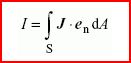
where endA is the vector surface element
NOTE 1 – The electric current through a surface is equal to the limit of the quotient of the electric charge transferred through that surface during a time interval by the duration of this interval when this duration tends to zero.
NOTE 2 – For charge carriers confined to a surface, the electric current is defined through a curve of this surface (see the note to term “lineic electric current”).
[IEV number 121-11-13]FR
courant (électrique), m
courant (de conduction), m
grandeur scalaire égale au flux de la densité de courant électrique J à travers une surface orientée donnée S:
où endA est l'élément vectoriel de surface
NOTE 1 – Le courant électrique à travers une surface est égal à la limite du quotient de la charge électrique traversant cette surface pendant un intervalle de temps par la durée de cet intervalle lorsque cette durée tend vers zéro.
NOTE 2 – Pour des porteurs de charge confinés sur une surface, le courant électrique est défini à travers une courbe de cette surface (voir la note au terme "densité linéique de courant").
[IEV number 121-11-13]Тематики
- электротехника, основные понятия
Синонимы
EN
DE
- (elektrische) Stromstärke
- Leitungsstromstärke
- Stromstärke, (elektrische)
FR
Франко-русский словарь нормативно-технической терминологии > courant de conduction
-
6 induction magnétique
магнитная индукция
Векторная величина, характеризующая магнитное поле и определяющая силу, действующую на движущуюся электрически заряженную частицу со стороны магнитного поля.
Примечание — Магнитная индукция равна отношению силы, действующей на электрически заряженную частицу, к произведению заряда и скорости частицы, если направление скорости таково, что эта сила максимальна и имеет направление, перпендикулярное к векторам силы и скорости, совпадающее с поступательным перемещением правого винта при вращении его от направления силы к направлению скорости частицы с положительным зарядом.
[ ГОСТ Р 52002-2003]
магнитная индукция
Векторная физическая величина, характеризующая магнитное поле, равная отношению силы, действующей на единицу длины прямолинейного проводника, перпендикулярного направлению поля, к силе тока в проводнике. Обозначение В,
Единица измерения
Тесла (русское Тл, международное Т)
[Система неразрушающего контроля. Виды (методы) и технология неразрушающего контроля. Термины и определения (справочное пособие). Москва 2003 г.]EN
magnetic flux density
magnetic induction
vector field quantity B which exerts on any charged particle having velocity v a force F equal to the product of the vector product v x B and the electric charge Q of the particle:
F = Qv x B
NOTE 1 – The divergence of B is zero at all points:
div B = 0
NOTE 2 – The magnetic flux density B is sometimes called “magnetic field”, risking confusion with the magnetic field strength H.
[IEV number 121-11-19]FR
induction magnétique, f
champ vectoriel B qui engendre sur toute particule chargée de vitesse v une force F égale au produit du produit vectoriel v x B par la charge électrique Q de la particule:
F = Qv x B
NOTE 1 – La divergence de B est nulle en tout point:
div B = 0
NOTE 2 – L’induction magnétique B est parfois appelée "champ magnétique", ce qui peut entraîner une confusion avec le champ magnétique H.
[IEV number 121-11-19]
Тематики
- электротехника, основные понятия
EN
DE
- (magnetische) Induktion (veraltet)
- Induktion (veraltet), (magnetische)
- magnetische Flußdichte
FR
Франко-русский словарь нормативно-технической терминологии > induction magnétique
-
7 densité de courant de déplacement
плотность тока смещения JD
Векторная величина, равная производной по времени от электрического смещения.
[ ГОСТ Р 52002-2003]EN
displacement current density
vector quantity equal to the time derivative of the electric flux density D:
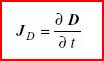
[IEV number 121-11-42]FR
densité de courant de déplacement, f
grandeur vectorielle égale à la dérivée par rapport au temps de l'induction électrique D:
[IEV number 121-11-42]Тематики
- электротехника, основные понятия
Синонимы
EN
DE
FR
Франко-русский словарь нормативно-технической терминологии > densité de courant de déplacement
-
8 unité (de mesure) derivée
производная единица системы единиц физических величин
производная единица
Единица производной физической величины системы единиц, образованная в соответствии с уравнением, связывающим ее с основными единицами или с основными и уже определенными производными.
Примеры
1. 1 м/с - единица скорости, образованная из основных единиц СИ - метра и секунды.
2. 1 Н - единица силы, образованная из основных единиц СИ - килограмма, метра, и секунды.
[РМГ 29-99]EN
derived unit
unit of measurement for a derived quantity
NOTE 1 – Some derived units in the International System of Units (SI) have special names, e.g. hertz for frequency and joule for energy, but others have compound names, e.g. metre per second for speed. Compounds including units with special names are also used, e.g. volt per metre for the electric field strength, and newton metre for torque. See in particular ISO 31 and ISO/IEC 80000.
NOTE 2 – Derived units can also be expressed by using multiples and submultiples. For example, the metre per second, symbol m/s, and the centimetre per second, symbol cm/s, are derived units of speed in the SI. The kilometre per hour, symbol km/h, is a unit of speed outside the SI but accepted for use with the SI, because the unit hour is accepted for use with the SI. The knot, equal to one nautical mile per hour, is a unit of speed outside the SI, that is used by special interest groups.
Source: ISO/IEC GUIDE 99:2007 1.11
[IEV number 112-01-19]FR
unité dérivée, f
unité de mesure d'une grandeur dérivée
NOTE 1 – Certaines unités dérivées dans le SI ont des noms spéciaux, par exemple le hertz pour la fréquence et le joule pour l'énergie, tandis que d'autres ont des noms composés, par exemple le mètre par seconde pour la vitesse. Les unités ayant des noms spéciaux sont aussi utilisées dans des noms composés, par exemple le volt par mètre pour le champ électrique et le newton mètre pour le moment de torsion. Voir en particulier l'ISO 31 et l'ISO/CEI 80000.
NOTE 2 – On peut aussi exprimer les unités dérivées en utilisant des multiples et des sous-multiples. Par exemple, le mètre par seconde, symbole m/s, et le centimètre par seconde, symbole cm/s, sont des unités dérivées de vitesse dans le SI. Le kilomètre par heure, symbole km/h, est une unité de vitesse en dehors du SI mais en usage avec le SI, parce que l'heure est une unité en usage avec le SI. Le nœud, égal à un mille marin par heure, est une unité de vitesse en dehors du SI, qui répond aux besoins spécifiques de certains groupes d’utilisateurs.
Source: ISO/IEC GUIDE 99:2007 1.11
[IEV number 112-01-19]Тематики
- метрология, основные понятия
Синонимы
EN
DE
FR
Франко-русский словарь нормативно-технической терминологии > unité (de mesure) derivée
-
9 courant de déplacement
ток смещения
Совокупность электрического тока смещения в пустоте и электрического тока поляризации, количественно характеризуемая скалярной величиной, равной производной по времени от потока электрического смещения сквозь рассматриваемую поверхность.
[ ГОСТ Р 52002-2003]EN
displacement current
scalar quantity equal to the flux of the displacement current density JD through a given directed surface S:
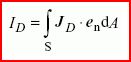
where endA is the vector surface element
[IEV number 121-11-43]FR
courant de déplacement, m
grandeur scalaire égale au flux de la densité de courant de déplacement JD à travers une surface orientée donnée S:
où endA est l'élément vectoriel de surface
[IEV number 121-11-43]Тематики
- электротехника, основные понятия
Синонимы
EN
DE
FR
Франко-русский словарь нормативно-технической терминологии > courant de déplacement
-
10 dose équivalente
эквивалентная доза
—
[ http://www.eionet.europa.eu/gemet/alphabetic?langcode=en]EN
equivalent dose
A quantity used in radiation protection, expressing all radiation on a common scale for calculating the effective absorbed dose. The unit of dose equivalent is the rem. which is numerically equal to the absorbed dose in rads multiplied by certain modifying factors such as the quality factor, the distribution factor, etc. (Source: KOREN)
[http://www.eionet.europa.eu/gemet/alphabetic?langcode=en]Тематики
EN
DE
FR
Франко-русский словарь нормативно-технической терминологии > dose équivalente
-
11 élément de courant
элемент тока
Векторная величина, равная произведению электрического тока проводимости вдоль линейного проводника и бесконечно малого отрезка этого проводника.
[ ГОСТ Р 52002-2003]EN
current element
at a given point of a filiform tube of current, vector quantity equal to the product of the electric current and the vector line element at that point
NOTE – A current element is expressed by Idr or by Ietds where I is the electric current and dr = etds the vector line element.
[IEV number 121-11-17]FR
élément de courant, m
en un point donné d’un tube de courant filiforme, grandeur vectorielle égale au produit du courant électrique par l'élément vectoriel d'arc en ce point
NOTE – Un élément de courant est représenté par Idr ou par Ietds où I est le courant électrique et dr = etds l'élément vectoriel d'arc.
[IEV number 121-11-17]Тематики
- электротехника, основные понятия
Синонимы
EN
DE
FR
Франко-русский словарь нормативно-технической терминологии > élément de courant
См. также в других словарях:
Equal — E qual, n. 1. One not inferior or superior to another; one having the same or a similar age, rank, station, office, talents, strength, or other quality or condition; an equal quantity or number; as, If equals be taken from equals the remainders… … The Collaborative International Dictionary of English
equal — I. adjective Etymology: Middle English, from Latin aequalis, from aequus level, equal Date: 14th century 1. a. (1) of the same measure, quantity, amount, or number as another (2) identical in mathematical value or logical denotation ; equivalent… … New Collegiate Dictionary
Equal — E qual, a. [L. aequalis, fr. aequus even, equal; akin to Skr. ?ka, and perh. to L. unus for older oinos one, E. one.] 1. Agreeing in quantity, size, quality, degree, value, etc.; having the same magnitude, the same value, the same degree, etc.;… … The Collaborative International Dictionary of English
Equal temperament — Equal E qual, a. [L. aequalis, fr. aequus even, equal; akin to Skr. ?ka, and perh. to L. unus for older oinos one, E. one.] 1. Agreeing in quantity, size, quality, degree, value, etc.; having the same magnitude, the same value, the same degree,… … The Collaborative International Dictionary of English
equal — 1 adj [Latin aequalis, from aequus level, equal] 1: like in quality, nature, or status 2: like for each member of a group, class, or society 3: regarding or affecting all objects in the same way: impartial equal 2 … Law dictionary
Quantity — • Interpretations of quantity as either a physical or theoretical abstraction Catholic Encyclopedia. Kevin Knight. 2006. Quantity Quantity … Catholic encyclopedia
equal — [ē′kwəl] adj. [ME < L aequalis, equal < aequus, level, even, flat] 1. of the same quantity, size, number, value, degree, intensity, quality, etc. 2. having the same rights, privileges, ability, rank, etc. 3. evenly proportioned; balanced or … English World dictionary
Equal Pay Act of 1963 — USA A federal law prohibiting wage discrimination on the basis of sex (29 U.S.C. §206(d)). The Equal Pay Act is part of the Fair Labor Standards Act (FLSA) and applies to all employers covered under the FLSA. To make a claim for discrimination… … Law dictionary
Equal — E qual, v. t. [imp. & p. p. {Equaled}or {Equalled}; p. pr. & vb. n. {Equaling} or {Equalling}.] 1. To be or become equal to; to have the same quantity, the same value, the same degree or rank, or the like, with; to be commen?urate with. [1913… … The Collaborative International Dictionary of English
equal — ► ADJECTIVE 1) being the same in quantity, size, degree, value, or status. 2) evenly or fairly balanced: an equal contest. 3) (equal to) having the ability or resources to meet (a challenge). ► NOUN ▪ a person or thing that is equal to another. ► … English terms dictionary
equal sign — equal ,sign or equals ,sign noun count the sign = used in mathematics to show that two sets of numbers are the same in quantity or amount … Usage of the words and phrases in modern English
